Mars at Monsaraz: Experiment Design Challenge

The EXPLORE project invites students to propose a scientific experiment to be executed during the second Analog Mars Mission at the Mars Analog Research Station (MARS) inside OLA – Observatório do Lago Alqueva (Lake Alqueva Observatory) in Monsaraz, Portugal.
Proposals must focus on simulated Mars surface activities, such as searching for traces of life, testing human factors, or analyzing geological samples.
The proposed experiments must use the materials available on the EXPLORE Mission Physical and Virtual Toolkits.
1. Eligibility and Student Roles
- Target Audience: The competition is designed for lower secondary and secondary school students, particularly those aged 12 to 18 years old.
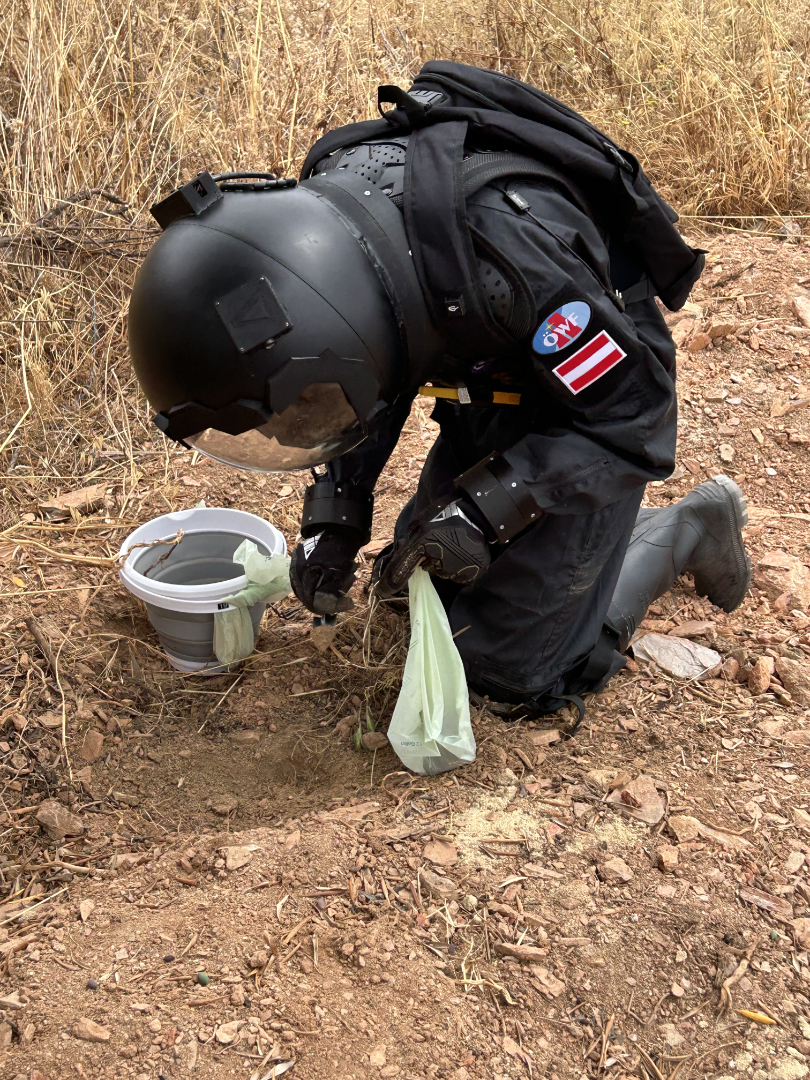
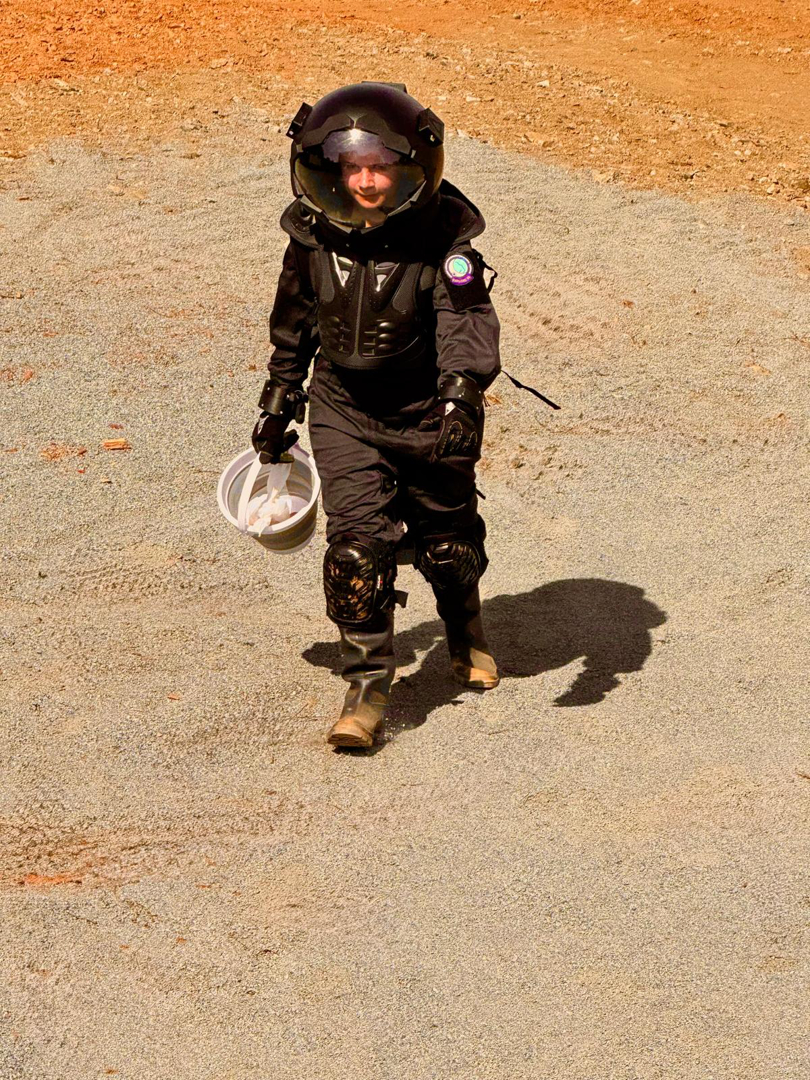
- Mission Execution: Selected experiments will be performed by the student analog astronauts on-site, supported by their peers acting as the Mission Support Center (MSC) and Flight Control Team, during the EXPLORE 2 Mission in April 2026.
2. Toolkit Constraints
All proposals must only use components from the official EXPLORE Mission Toolkit. No outside hardware is permitted to ensure equity and logistical feasibility. The complete list of toolkit activities and materials is available at EXPLORE Misson Toolkit. Available components include:
- Physical Toolkit Hardware:
- Delta Analog Space Suits: Used for Extra-vehicular Activity (EVA) simulations (P1).
- Sensors & Data Loggers: Air quality sensors (CO2, temperature, humidity), fitness trackers for life sign measurements (heart rate, blood oxygen), and moisture meters (P3, P4, P7).
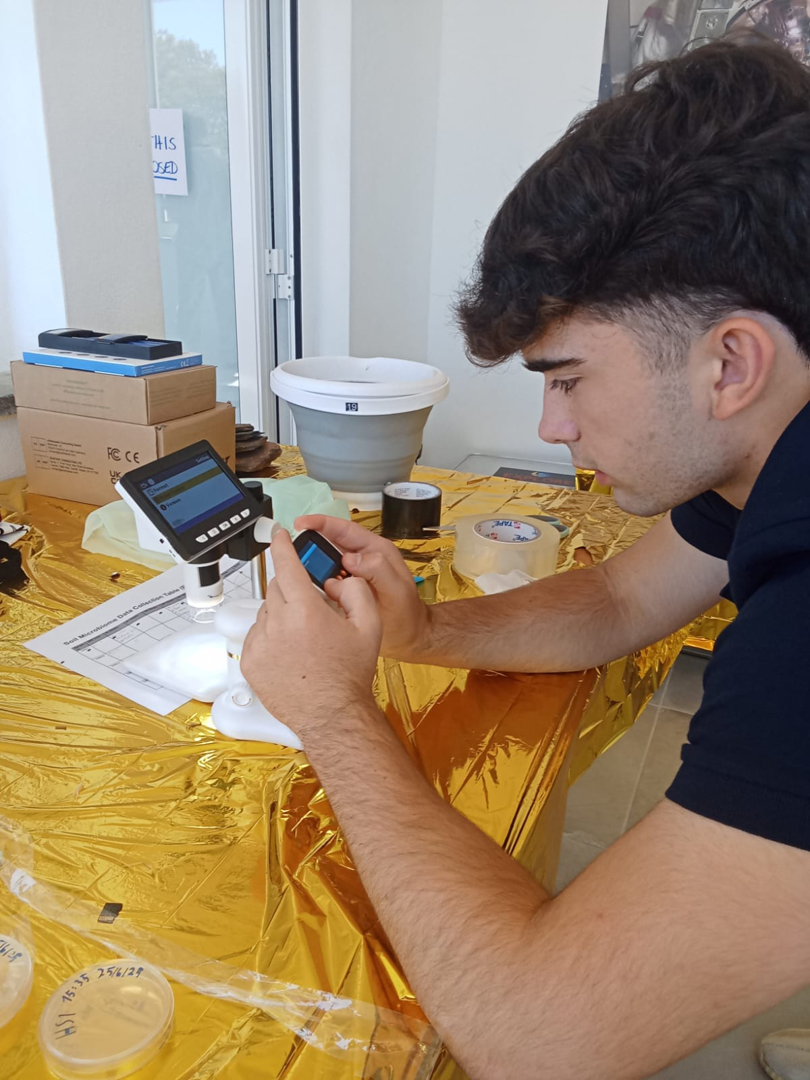
- Biological Tools: Sterile swabs, agar plates for hygiene/soil microbiome analysis, and microscopes (P5, P6).
- Geological Equipment: Hammers, chisels, sieves, magnets for micrometeorite searches, and kitchen scales (P8).
- Robotics: Arduino/Raspberry Pi rover kits for remote exploration (P9).
- Communication Tools: Walkie-talkies and phonetic alphabet guides (P2).
- Virtual Toolkit Resources: Digital logbooks for documentation and data from robotic telescopes or satellite imaging (V12, V14).
3. Proposal Requirements
Proposals must be submitted using a structured format that mimics a professional Standard Operation Procedure (SOP). Each entry must include:
- Research Question: A clear statement of what the experiment aims to discover about the Martian environment or astronaut performance.
- Hypothesis: A prediction of the expected results.
- Step-by-Step Procedure: A detailed guide for the analog astronauts to follow while wearing the Delta Suit, including estimated durations for each step.
- Safety Review: A short assessment of potential risks to the crew or hardware and how to mitigate them.
- Data Collection Plan: Specification of which toolkit sensors or logbook sections will be used to record findings.
The proposals must be submitted by an online form (link at the end of this document). The deadline for submissions is March 1 March 10, 2026. A form template can be downloaded here.
4. Evaluation Criteria
Entries will be judged by the EXPLORE Project Consortium based on:
- Scientific Rigor: The clarity of the research question and the validity of the methodology.
- Toolkit Utilization: Creative and effective use of the specific tools provided in the physical and virtual kits.
- Feasibility: Ability to perform the experiment within the constraints of an analog mission (e.g., suit impairments, limited EVA time, meteorological conditions, etc.).
- Innovation: The level of creativity demonstrated in addressing Mars exploration challenges.
5. Selection and Implementation
The best entries will be integrated into the Mission Manifest for the April 2026 mission in Monsarz Analog Research Station. The winning students will have their work documented in the final EXPLORE Mission 2 Report and shared during national EXPLORE Community Days.
The selected experiments will be announced on the EXPLORE website and social media on March 30, 2026. Experiments will be executed during the mission according to their final rank, subject to mission conditions.
Analogy for Students: Proposing an experiment for an analog mission is like writing a recipe for someone else to cook. You must use only the ingredients found in your kitchen (the toolkit), and your instructions must be so clear that even someone wearing bulky oven mitts (the Delta Suit) can follow them perfectly to create a successful dish (scientific discovery).
6. How to Apply
Use the form below to submit your entry:
The deadline for submission is March 1 March 10, 2026.
The selected experiments will be announced on March 30, 2026.
For any questions or inquiries, please contact us using this contact form.